Choosing the right paving for a London garden
A plain-English guide from a working South East London landscaping team.
Paving is one of the most-asked, most-under-explained parts of garden design. Walk into a stone yard and you'll see Indian sandstone, Yorkstone, limestone, granite, porcelain, brick, basalt, slate. Different paving suits different houses, different gardens, and different uses.
This post breaks down what each material is actually good for.
What "right paving" means
Paving choice = what you can see + what you can pay + what'll last + what suits the house. Higher-end stone looks better but costs more. Modern porcelain is more practical but less period-warm. Brick is sympathetic on Victorian houses but slow to lay.
Pick the right paving and the garden settles into the back of the house like it was always there.
The main paving types
Sawn London Yorkstone
The gold standard. Sawn from natural Yorkstone, with a sawn finish on the top. Honest, hand-finished look that ages to a soft grey.
Use for: any Victorian, Georgian or Edwardian house.
Pros: beautiful, ages well, gets better with time, premium feel.
Cons: premium price (£90-£140/sqm material), variable colour batch-to-batch, can stain.
Sawn Indian sandstone (Mint, Kandla Grey, Raj, Modak)
Imported sandstone from India, sawn and calibrated to consistent thickness. Looks like Yorkstone at a fraction of the price.
Pros: excellent value (£35-£60/sqm material), good supply.
Cons: can fade slightly in 5+ years.
Our take: the right paving for 60% of London terrace gardens.
Porcelain
Manufactured ceramic tiles, fired at very high temperature. Stone-look or concrete-look finishes.
Pros: super-flat finish, doesn't stain, doesn't fade, doesn't need sealing, frost-proof.
Cons: harder to cut, looks slightly less warm than natural stone.
Our take: the right call for modern gardens, family gardens with kids and red wine.
Limestone
Quarried limestone, often from France or India. Smooth or honed finishes.
Cons: softer than sandstone, can stain, can scratch.
Granite
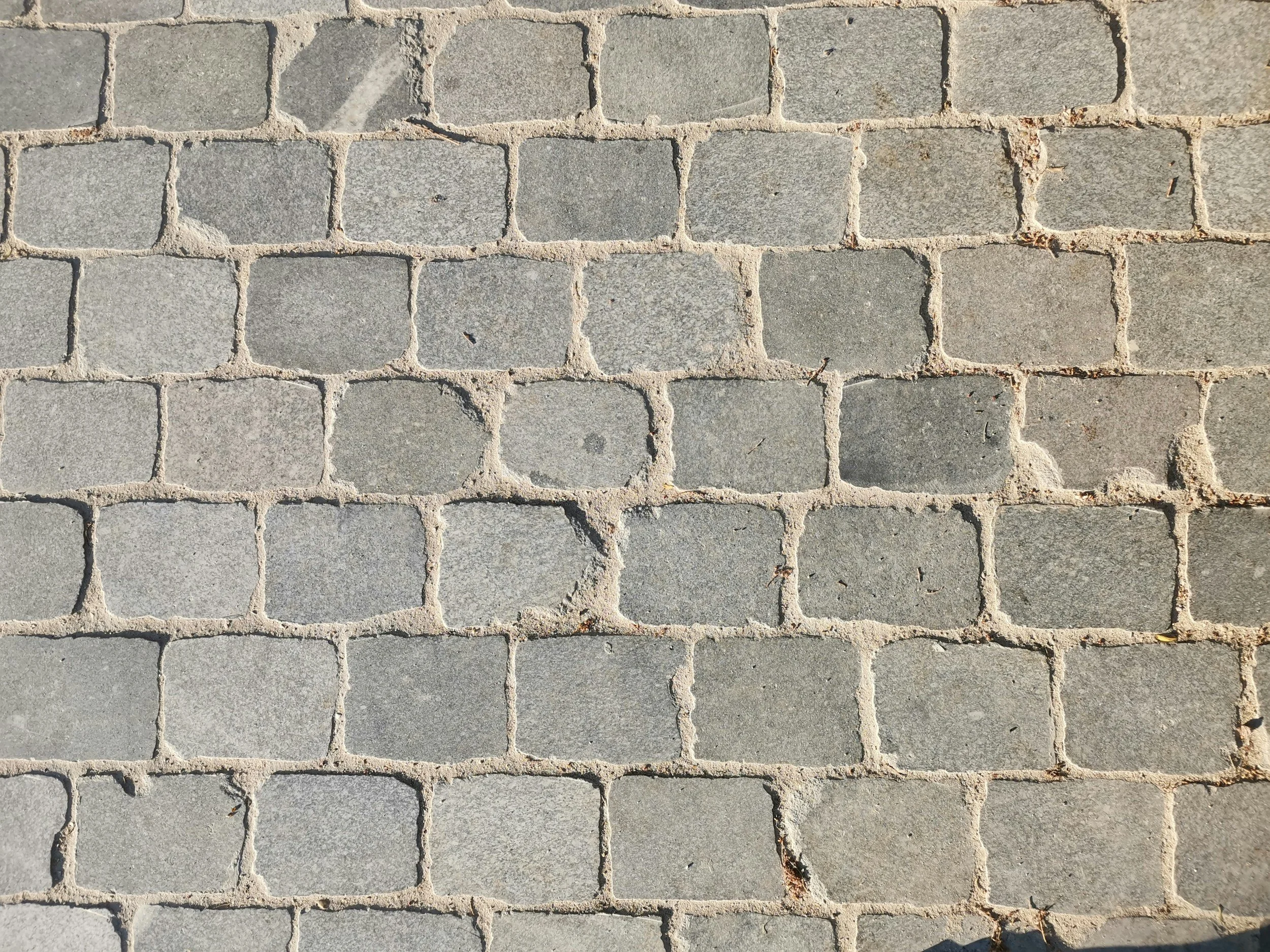
Hard stone, available as full slabs or as setts (small block paving).
Pros: the hardest paving stone in common use, lasts forever.
Cons: expensive in slab form (£70-£120/sqm material).
Our take: brilliant as setts for edging, driveways and small areas.
Brick paving
Fired clay bricks laid as paving, usually in stretcher bond, herringbone or basket-weave patterns.
Pros: beautiful, sympathetic to Victorian and Georgian houses, ages well.
Cons: slower to lay than slab paving, more labour cost per sqm.
Concrete paving
Pre-cast concrete slabs.
Pros: cheap (£15-£35/sqm material).
Cons: looks like what it is, fades to a chalky grey over time.
Our take: we don't lay concrete pavers as primary patios any more.
Where to use what
- Victorian terrace, period feel: Sawn London Yorkstone or sawn Mint Indian sandstone
- Edwardian semi: Sawn Yorkstone or sawn Kandla Grey sandstone
- Modern extension at the back of a Victorian: porcelain or sawn dark sandstone
- New-build modern garden: porcelain or sawn granite
- Front garden (Victorian): reclaimed brick or granite setts
- Side passage: reclaimed brick or sawn sandstone
- Driveway: granite setts or porcelain
- Pool surround / wet area: textured porcelain
- Heritage / listed: reclaimed Yorkstone or sawn London Yorkstone
- Tight budget: sawn Indian sandstone
Common mistakes
Light cream sandstone behind a London stock-brick Victorian. Looks too pale and modern. Mint or Kandla Grey is a better warm-tone match.
Big-format porcelain behind a small Victorian terrace. 1200x600mm slabs can look out of scale on a 30 sqm garden.
Different paving types meeting at random angles. Where two paving types meet, the line should be deliberate.
Mortar joints that look like grout lines. Wide, flat, light-coloured mortar joints look like a tiled bathroom.
What we recommend
For a typical Victorian or Edwardian terrace garden in Dulwich:
- Patio: sawn London Yorkstone if budget allows; otherwise sawn Mint Indian sandstone
- Pathways: reclaimed brick or matching paving with a brick edge
- Edging: brick-on-edge or granite sett
- Steps: brick risers, stone treads
For a modern garden behind a contemporary extension:
- Patio: porcelain in a stone-look finish
- Pathways: matching porcelain or contrasting granite
- Edging: powder-coated steel edging