Landscaping a Victorian terrace garden in South London
What's different about these gardens, and how to landscape them properly.
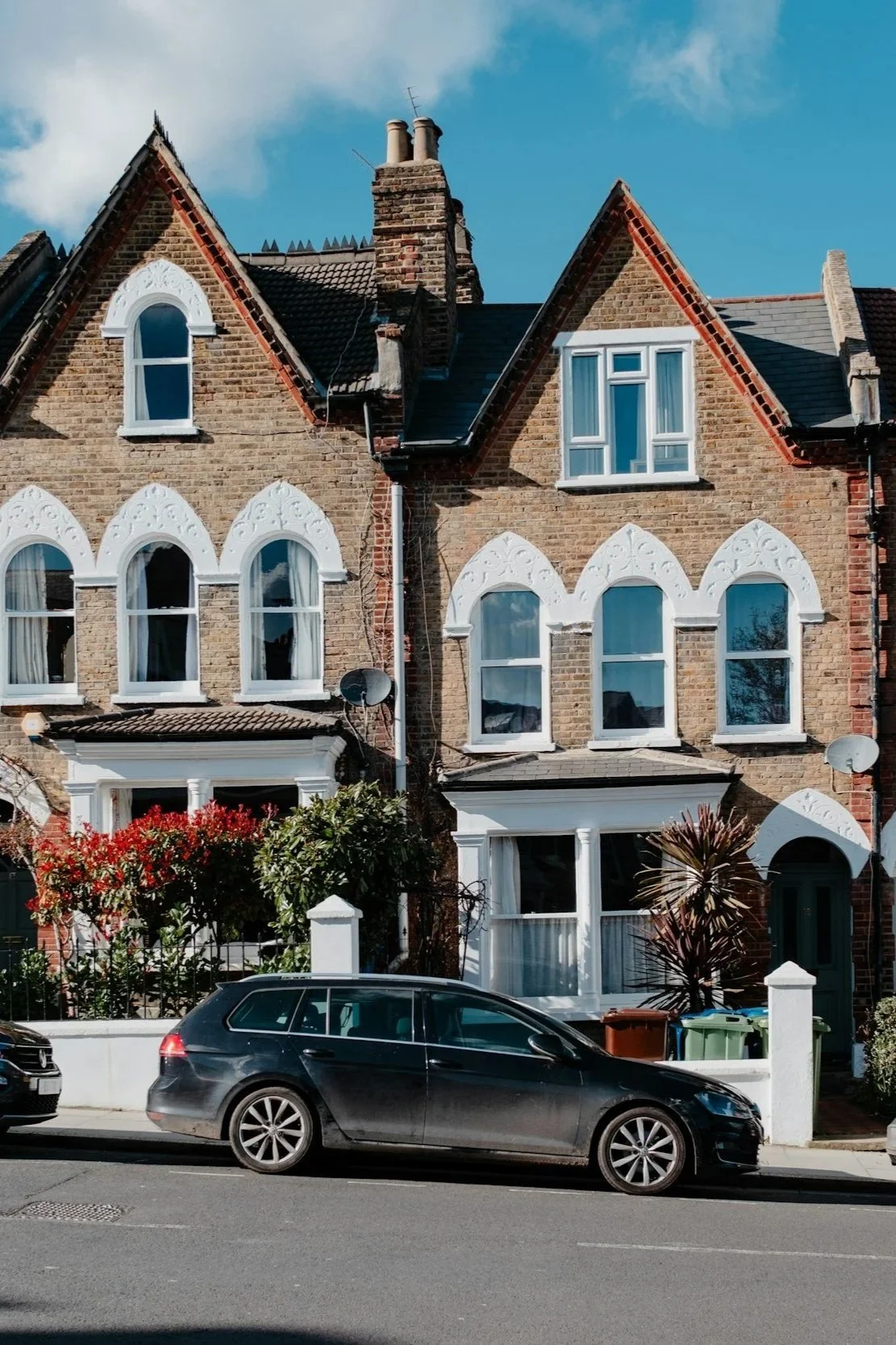
Most of the gardens we work on in Dulwich, Herne Hill and Peckham sit behind Victorian terraces built between 1870 and 1905. If you live in one, you know the rhythm already — narrow, deep gardens, often 30-60 sqm, with a mature street tree casting shade across half of it, original boundary walls (sometimes), an old patio (sometimes), and London clay underneath all of it.
This post is about what's different, and what to expect if you're planning to landscape one properly.
What a Victorian terrace garden is made of
London clay
The vast majority of South East London sits on London clay — a heavy, water-retaining, slow-draining subsoil. London clay does specific things in a garden: it holds water, it moves with the seasons, and it compacts under foot traffic.
Original boundary walls
Many Victorian gardens still have their original brick boundary walls — usually London stock brick in lime mortar, with a brick-on-edge coping. Sometimes they're sound. Sometimes they've leaned. Sometimes the bottom courses have spalled and the wall is tipping forward.
Mature trees
A surprising proportion of Victorian terrace gardens have one significant tree — a sycamore, lime, plane, oak, or sometimes a more deliberate planting like a magnolia. Tree Preservation Orders are common.
How to tell what you've got
Soil: Dig a 50cm test pit in a bed. Heavy yellow-grey clay = London clay subsoil.
Wall: Drop a plumb line down the face. More than 30mm out of vertical = the wall has moved.
Drainage: Watch the garden during a heavy rain. Water pooling on the lawn or patio = drainage issue.
Trees: Check the council's planning portal — TPOs are usually shown there.
Why landscaping a Victorian garden takes longer
More groundworks per square metre. Heavy clay is harder to dig out than sandy soil. Buried Victorian rubble is common. We typically take a third more time on excavation than a modern-build garden of the same size.
Mature trees complicate the build. Root protection zones mean we can't put a mini-digger everywhere. Hand-digging is slower.
Original walls add work. Repointing existing walls, rebuilding leaning sections, building new walls in keeping with the period.
Drainage planning. We design French drains, soakaways, or surface-water connections into most Victorian garden builds.
Materials that suit Victorian gardens
For paving:
- Sawn London Yorkstone — the gold standard. Honest, ages beautifully.
- Sawn Indian sandstone (Mint, Kandla Grey) — looks like Yorkstone at half the price.
- Reclaimed Yorkstone — premium, full of character.
- Reclaimed London stock brick — for paths and side passages.
For walls:
- Reclaimed London stock brick — first choice for any wall that's part of the period scene.
- Lime mortar — essential for any Victorian-era wall.
For joinery:
- Western red cedar — light, naturally rot-resistant, weathers to silver
- Oak — premium, hard-wearing, beautiful grain
Plants for Victorian terrace gardens
The classic plant palette for a London Victorian garden:
- Structure trees: multi-stem hornbeam, magnolia stellata, Amelanchier
- Evergreen structure: clipped yew, box (where blight allows)
- Climbers: wisteria, climbing hydrangea, jasmine
- Border perennials: hellebores, hardy geraniums, ferns, Heuchera
- Seasonal colour: salvias, Verbena bonariensis, foxgloves
Common mistakes
- Modern porcelain behind a soft brick Victorian. Often looks too cold.
- Concrete pavers in a period garden. Looks like what it is.
- OPC mortar on Victorian brickwork. Brick faces blow off within a decade.
- Building a wall straight onto soil. Leans. Always.
- Trying to fight the clay. Plant for clay, drain where you must.
About Victorian Terrace Gardens
-
Yes, almost always. Once Victorian brick walls go they don’t come back, and a rebuilt-on-original-foundations wall is one of the prettiest things in any London garden.
-
Usually yes. We’ll survey, identify the cause (perched water table, sub-soil compaction, surface-water run-off), and design a solution — usually a French drain, sometimes a soakaway, sometimes regrading and topsoil amendment.
-
Almost always. We repoint with lime mortar, rebuild any sections that have moved, and save and reuse the original bricks. The wall ends up structurally sound but looks unchanged.
-
Quite a lot. We respect root protection zones (typically 12x trunk diameter), don’t compact soil within them, and design the layout to work around the tree. Sometimes we work with an arboriculturist on sensitive specimens.
-
Often yes — a 8-12 sqm studio fits comfortably in a 50 sqm garden if positioned well. Smaller than that and the build cost per sqm rises significantly.
-
Yes. Many of our period-house clients phase the work — patio and walls year 1, garden room year 2, planting year 3. We’ll design the whole thing first so each phase fits.