Garden Walls & Structures
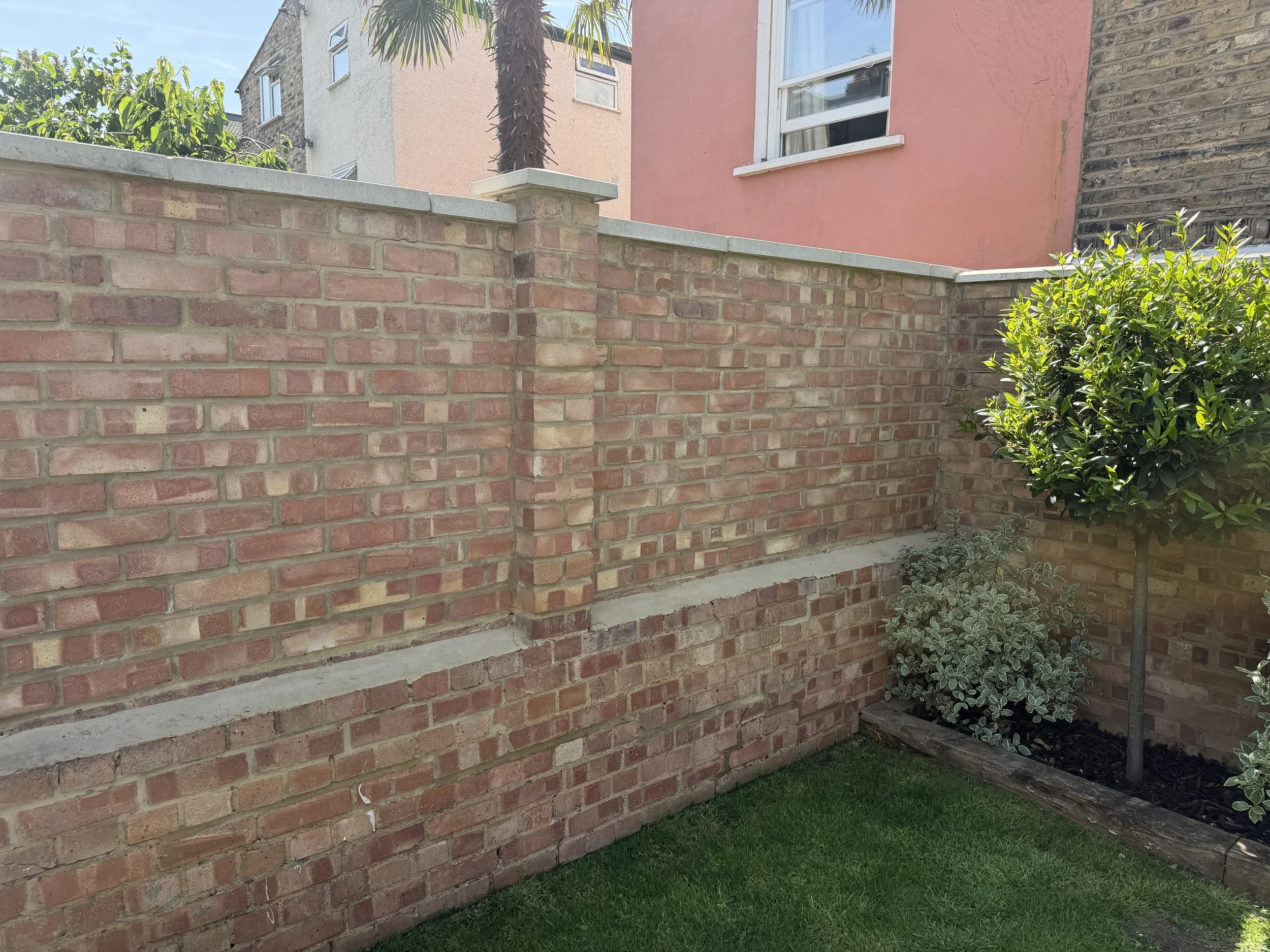
Brick boundary walls, retaining walls, raised beds, brick edging and garden steps. Built to engineering spec, finished to match your house.
Walls are where landscaping meets actual building. A garden wall isn't just bricks — it's foundations, courses, a damp-proof course at the right level, the right mortar mix for the local frost cycle, weep holes where it's retaining anything, and finishes that match a London terrace built in 1875.
We build all our walls the way we build extensions for Dulwich Building Co. Proper footings, proper bricks, proper mortar, proper finishes. Garden walls leaning by year five aren't accidents — they're walls built without footings.
What we build
- Brick boundary walls (front, side, rear) up to 1.8m without engineering input
- Taller walls and structurally significant retaining walls (with structural engineer sign-off)
- Retaining walls for level changes, terracing and split-level gardens
- Raised beds — brick, blockwork-with-render, sleeper, gabion
- Brick edging and mowing strips
- Garden steps — brick risers, stone treads, full masonry flights
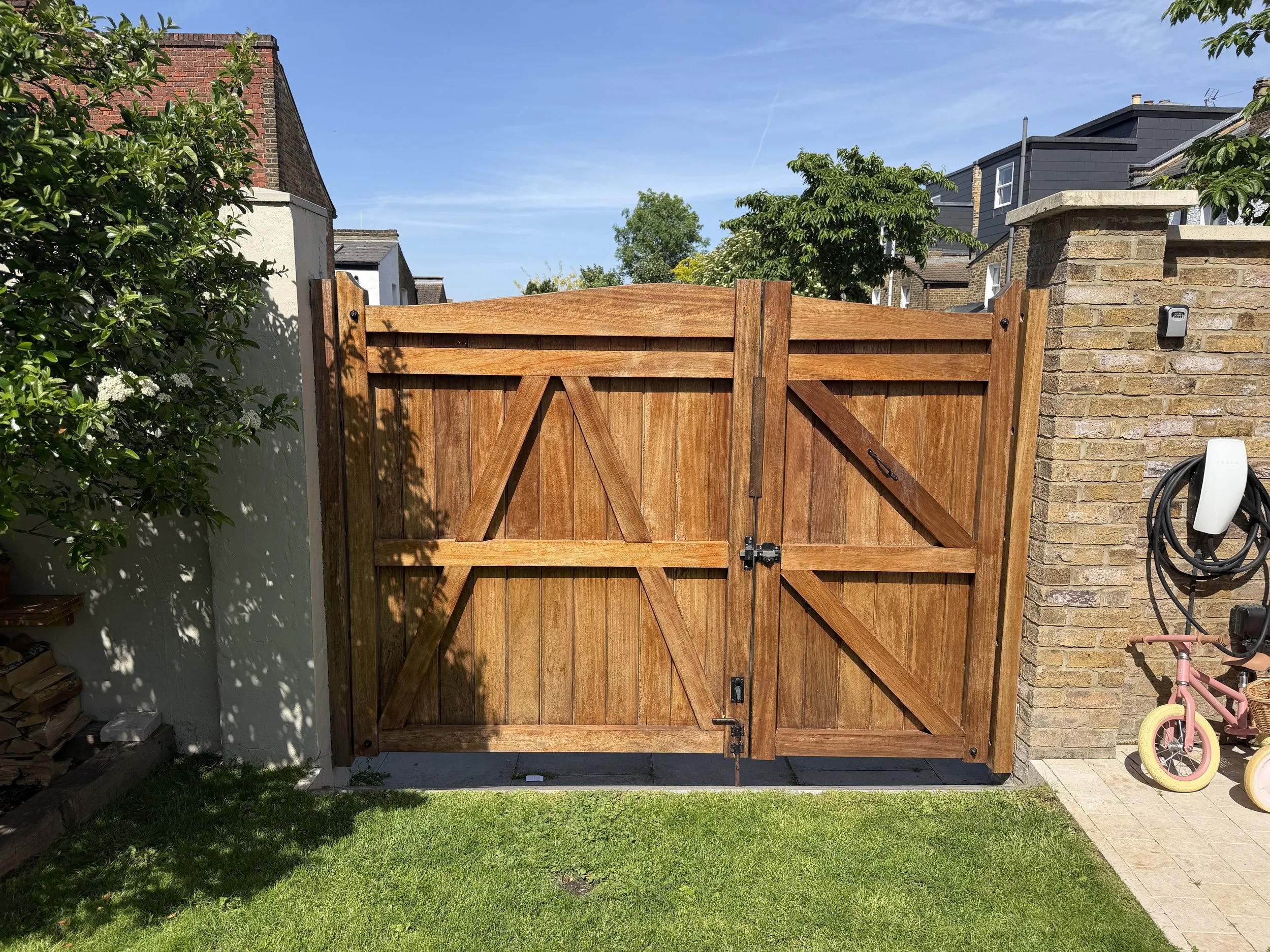
- Brick or render piers for gates and railings
- Restoration and rebuilding of existing Victorian garden walls
- Repointing of existing stock-brick walls
Our wall-building process
1. Survey and design. We measure the wall line, check ground levels, identify any drains, services or boundaries that affect what we can build. Any wall over 1.0m retaining or over 2.0m freestanding gets engineer's sign-off as standard.
2. Materials specified. Bricks chosen to match your house — usually reclaimed London stock for Victorian streets, sometimes new stock-brick blends, occasionally imperial-sized bricks for older houses. Mortar mix selected for the brick.
3. Foundations. Concrete strip footings, dug to a depth that suits the soil and the wall height. London clay needs deeper footings than gravel — we typically dig 600-900mm down for a domestic boundary wall, deeper for retaining walls and where there are nearby trees.
4. Damp-proof course. Two courses of engineering brick at DPC level, or an integral DPC strip, depending on the wall.
5. Build. Bricks laid in stretcher bond or English bond depending on wall thickness. Joints kept consistent at 10mm. Weep holes built into retaining walls every metre or so.
6. Coping or capping. Brick-on-edge for traditional finish, sandstone or coping stone for a more decorative top, render and concrete for modern lines.
7. Pointing. Joint profile chosen to suit the brick — bucket-handle (concave) for most modern brickwork, weather-struck for Victorian, flush for tight modern blends.
8. Clean down. Bricks cleaned down with a brick acid where appropriate, mortar splashes off the surrounding paving and lawn.
Why London garden walls fail
Three reasons, in order of frequency:
1. No footing or a thin one. A wall built straight onto soil moves with seasonal clay shrinkage and frost heave. Within five years it's leaning. Within ten it's gone. We always dig proper footings.
2. Wrong mortar. Modern OPC cement mortar on a Victorian wall is too hard for the soft stock bricks. We use lime-based mortar on Victorian and earlier walls.
3. No damp-proof course. Bottom courses sit in wet soil, brick spalls, mortar erodes, wall undermines itself. We always include DPC.
Materials we use
- Reclaimed London stock brick — the right look for any Victorian or Edwardian London terrace.
- New stock-brick blends — Wienerberger, Imperial, Northcot make blends that match aged stocks.
- Engineering brick for DPC courses and below ground.
- Imperial-sized bricks for matching pre-1965 buildings.
- Lime mortar (NHL 3.5 or hot-lime) for Victorian and earlier walls.
- Modern mortar (cement-lime-sand 1:1:6) for new walls.
- Sandstone or Yorkstone coping for a premium finish.
What it costs
Indicative ranges. Final price after a site visit and measurement.
- New brick boundary wall (per metre run, up to 1.5m high): £550 to £950
- Retaining wall, brick-faced (per sqm of wall face): £700 to £1,200
- Raised bed, brick (per linear metre, ~600mm high): £350 to £550
- Garden steps (per step, full masonry): £400 to £750
- Rebuild of existing Victorian wall (per metre run): £700 to £1,300
- Repointing of existing stock-brick wall (per sqm): £80 to £160
- Render finish on blockwork wall (per sqm): £85 to £140
Areas we cover
East Dulwich · Dulwich Village · West Dulwich · Herne Hill · Peckham · Camberwell · Forest Hill · Honor Oak & Nunhead

Frequently Asked Questions
About Garden Walls & Structures
-
Generally not, if the wall is under 1m on a road frontage or under 2m elsewhere. Conservation areas (parts of Dulwich, Camberwell) and listed buildings have stricter rules. We’ll check before quoting.
-
For walls over 1m retaining, walls over 2m freestanding, or walls supporting a structure (garden room, decking) — yes. We work with two structural engineers we use regularly and we’ll bring them in if needed.
-
Almost always. We source reclaimed London stock from yards we know, or specify new blends that age into the right colour. Match isn’t 100% on day one (new bricks are crisper) but they age into the existing wall within 2-3 years.
-
Yes, if the bricks are sound. We’ll lift the wall carefully, clean each brick, and rebuild on a new foundation with the original brick on the face.
-
Depends how much it’s moved. A wall that’s leaned more than ~30mm from vertical should be rebuilt; a slight lean can sometimes be stabilised by rebuilding the top courses on a fresh DPC. We’ll tell you honestly.
-
Yes, but the Party Wall Act applies. We’ll help you serve the necessary notices on your neighbour and work to the agreed schedule.
How a quote works
Tell us about your garden.
Use the form opposite to describe what you’d like done — a new patio, garden room, full redesign, or anything in between. WhatsApp 07584 928 681 if it’s easier.Send a plan or photos.
Already have a plan from a landscape architect or garden designer? Upload it. Otherwise, just attach a few photos of your existing garden so we can see what we’re working with.We assess the job and call you.
We’ll review everything you’ve sent, work out what’s involved, and ring you to talk it through.Book a site visit when it suits you.
We come and walk the garden with you to confirm the details, then send a clear, fixed written quote — itemised by element so you know exactly what you’re paying for.